Introduction: Why Survival Depends On More Than Money
We often chase wealth, gadgets, and comfort, believing money gives freedom. Yet in reality, the true power lies in the simplest necessities: the sustenance that fuels life. Without these, our bodies fail in just a day or two, no matter how rich we are. Food and water are not mere substances; they are the foundation of survival, shaping health, mind, and even social evolution. But why do humans depend so profoundly on these essentials? Why does the body crave them with such intensity, and why can we not survive without them? Understanding these mysteries reveals not just survival strategies but insights into human nature and the path to wellbeing.
From the moment humans first walked the Earth, these basic elements defined existence. Early humans did not think of money, luxury, or status, and they were focused on finding food, locating fresh water, and surviving harsh environments. The sensations of hunger and thirst were immediate reminders that life depended on these elements. Even now, in a modern world of abundance and technology, the same ancient truths apply. We may forget that the mind and body are intrinsically linked to the resources that sustain them.
Moreover, the pursuit of sustenance has driven innovation, social organisation, and culture. It has shaped economies, led to the development of agriculture, and influenced migration patterns. Recognising the central role of these essentials helps us understand why they hold more power than money, status, or luxury. Ultimately, our dependence on nourishment is not just biological and it is philosophical, social, and deeply human.
The Body’s Silent Dependence: Food And Water As Life Force
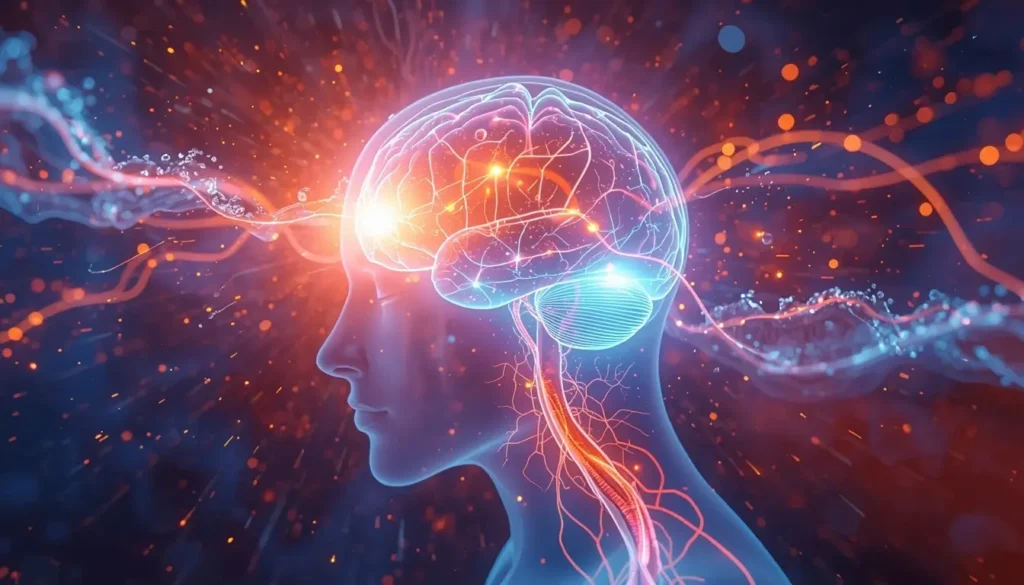
The human body is a marvel of evolution, intricately designed to convert nourishment into energy. Every cell depends on nutrients and hydration to function. While oxygen fuels the brain and vital organs, water and nutrients repair tissues, regulate temperature, and sustain metabolic balance. Without these inputs, the body begins to deteriorate within hours.

Interestingly, we can survive weeks without money, but only a few days without hydration and sustenance. This dependency highlights a fundamental truth: the body prioritises its basic needs over abstract desires. Hunger and thirst are not just signals; they are survival mechanisms, warning the mind that essential life forces are depleting.
The Paradox Of Desire: Why Humans Crave More Than Survival
Humans evolved to seek more than mere survival. While these are the foundation, society often pushes desire toward wealth, status, or convenience. Ironically, despite our addiction to food as a necessity, many people live primarily for the pleasure of eating. Gourmet culture, fast food, and constant snacking demonstrate that sustenance has evolved into a source of entertainment and habit, sometimes overshadowing its true purpose: survival.
Philosophers and scientists note this paradox: we feed the body, but at times, the body seems to feed our desires. Overindulgence in rich Fuel for the body, sugar, and processed substances leads to illness, reflecting a dangerous loop where the basic need becomes a source of dependency.

Evolutionary Design: Why Humans Are Wired To Need Food And Water
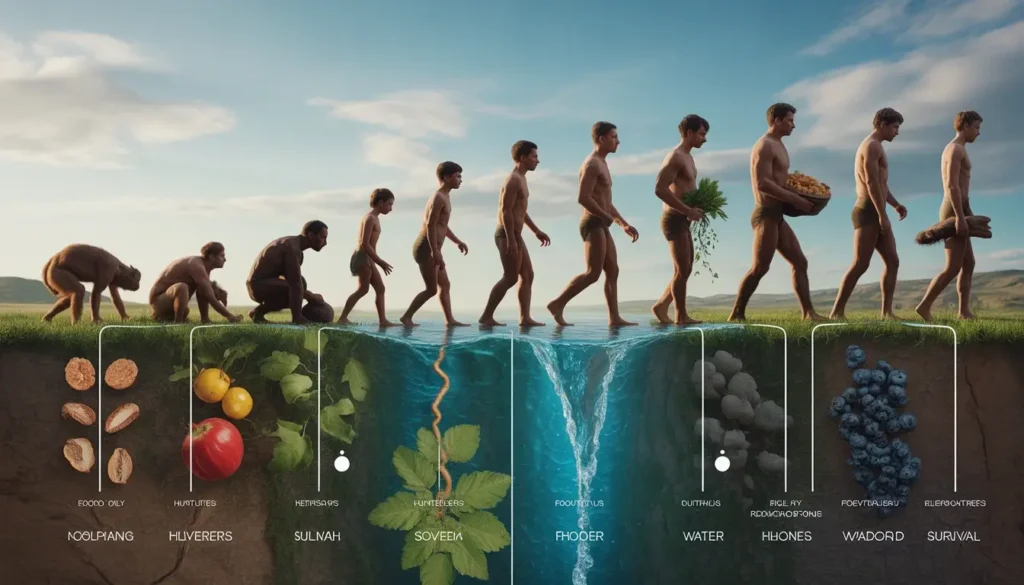
Evolution shaped humans to thrive in a delicate balance. Our ancestors survived in unpredictable environments, relying on hunting, gathering, and seasonal resources. The human body developed specialised mechanisms for processing nutrients and retaining water efficiently.
- Water: Every cell, tissue, and organ requires hydration for chemical reactions and circulation. Even minor dehydration affects cognition and energy.
- Food: Nutrients provide building blocks for muscles, brain function, and immune defence.
Our bodies also evolved to signal cravings and satiety, guiding survival. Hunger and thirst are evolutionary cues; ignoring them leads to weakness or death. Air alone is insufficient because oxygen, while critical, cannot replace the complex nutrients found in Sustenance.
Mind And Body Interplay: How Sustenance Shapes Mental Health
What we consume directly influences cognitive function, mood, and emotional stability. Nutrient deficiencies or dehydration can lead to fatigue, irritability, and poor decision-making. Conversely, balanced intake enhances focus, memory, and resilience.
This connection explains why certain cultures emphasise nutrition in childhood development and elderly care. The adage “you are what you eat” is literal: brain chemicals, neurotransmitters, and hormonal balance all depend on proper nourishment.
Food, Water, And The Hidden Risks: Diseases From Mismanagement
Overdependence or misuse of sustenance can be a double-edged sword. Processed Meals, excessive sugar, and poor hydration are major contributors to modern illness. Obesity, diabetes, heart disease, and digestive disorders all trace back to how humans consume, not just what they consume.
Interestingly, food can be a friend or a foe. It fuels survival but also drives epidemics when misused. This highlights the ethical and personal responsibility in understanding sustenance as power, not just pleasure.
The Social Dimension: How Sustenance Drives Civilisation
Beyond individual health, Sustenance shapes societies. Agricultural revolutions, trade routes, and urbanisation were all built on access to reliable nourishment. Wealth and power often emerge from the ability to control sustenance rather than money alone.
Even today, regions with scarce clean Drinking Supply or nutrition face social instability, emphasising that meals and hydration are pillars of civilisation. Philosophers call it the ultimate equaliser: regardless of status, everyone depends on these fundamentals.
Philosophical Insights: Do We Eat Food Or Does Food Consume Us?
At a deeper level, the relationship between humans and sustenance is symbolic. We feed our bodies, yet our desires often feed on what we consume. The modern lifestyle exemplifies this tension: food satisfies immediate hunger but also shapes identity, social norms, and mental patterns.
This philosophical lens helps explain why many live not just for survival but for the pursuit of taste, culinary exploration, or the ritual of meals. Understanding this interplay is crucial for mastering health and well-being.
Conclusion: Mastering Life Through Understanding Necessities
Sustenance is more than a biological requirement; it is the foundation of life, health, and human progress. While society encourages the pursuit of wealth, comfort, and status, true survival depends on water and nourishment. They fuel our organs, shape our minds, and guide evolutionary success.
Over time, humans have developed complex relationships with what they eat and drink. Food is no longer just survival, and it can become a source of pleasure, addiction, or even disease. Understanding this dual nature helps us make conscious choices that protect physical health and mental clarity.
Fluid and nourishment also shape society. Access to clean Drinking Supply and balanced nutrition has historically determined where civilisations flourish, influenced political stability, and even guided economic development. This shows that fundamental necessities are more than personal and are societal drivers.
Ultimately, recognising the supreme importance of these elements encourages a balanced, mindful life. We do not simply consume for pleasure; we honour the processes that sustain us, respect the evolutionary wisdom embedded in our bodies, and create a life that maximises health, longevity, and mental clarity. Food and water are both a gift and a responsibility. They are the silent architects of survival, shaping every aspect of who we are and how we live.
Find More about The Human:https://sasokay.com/human-roles-evolution-8-powerful-truths/ & https://sasokay.com/unraveling-the-mystery-of-life/
Why can humans survive only a few days without sustenance?
The body relies on continuous hydration and nutrients for vital chemical reactions, energy production, and the proper functioning of its organs. Even mild dehydration can impair brain function, while lack of nutrients weakens muscles, immune defences, and metabolic processes. Survival beyond a few days without water or food becomes increasingly difficult because the body’s systems start to shut down one by one.
How does Meals influence mental health?
Nutrition directly affects neurotransmitter production, hormonal balance, and brain function. For example, amino acids from protein help produce serotonin and dopamine, which regulate mood. Deficiencies in vitamins or minerals can lead to anxiety, irritability, depression, or cognitive decline, highlighting the critical link between diet and mental well-being.
Does air provide any nutrients besides oxygen?
Air contains trace water vapour and gases, but it cannot supply the variety of nutrients essential for survival. Oxygen supports life, but cells still require proteins, fats, carbohydrates, vitamins, and minerals from Sustenance to maintain growth, repair, and energy balance.
Can overconsumption of food harm the body?
Yes. Eating in excess, particularly processed and high-sugar Meals, can trigger obesity, diabetes, cardiovascular disease, and liver problems. Overindulgence strains the body, showing that food, while essential, can also become a source of harm if not consumed mindfully.
Why is sustenance more critical than money?
Money can buy comfort, services, or luxury, but it cannot replace the fundamental needs of life. These are absolute necessities. Without them, wealth becomes irrelevant. Understanding this hierarchy helps people prioritise health and survival above material obsession.
How does food affect social and cultural life?
Meals are not just nourishment; they define traditions, family bonding, and social structures. Festivals, rituals, and cultural identities often revolve around specific foods. Access to safe Edibles and clean Drinking Supply shapes social stability, population growth, and even political power, showing that sustenance has societal as well as personal importance.
What role does water play beyond hydration?
This is essential for digestion, temperature regulation, waste removal, and circulation. It also supports cellular chemical reactions and maintains skin, joint, and organ health. Even slight dehydration can affect focus, reaction time, and energy, proving that water is as critical as the food we consume.
Find More about
- Health and Nutrition Authority(balanced nutrition and mental health)https://www.who.int/news-room/fact-sheets/detail/healthy-diet
- Hydration Importance(role of water in human survival)https://www.cdc.gov/healthyweight/physical_activity/index.html
Any Suggestions, Feedback, or Information, Please Contact Us