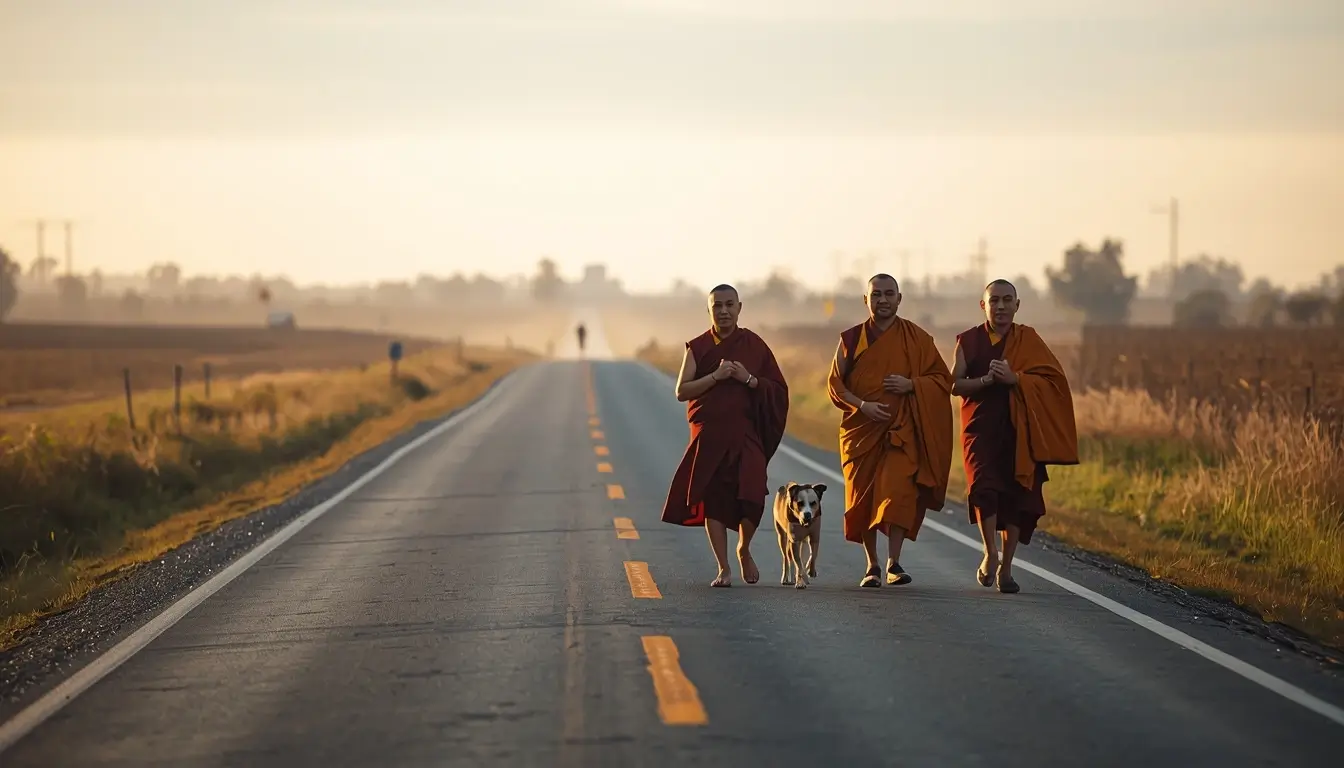
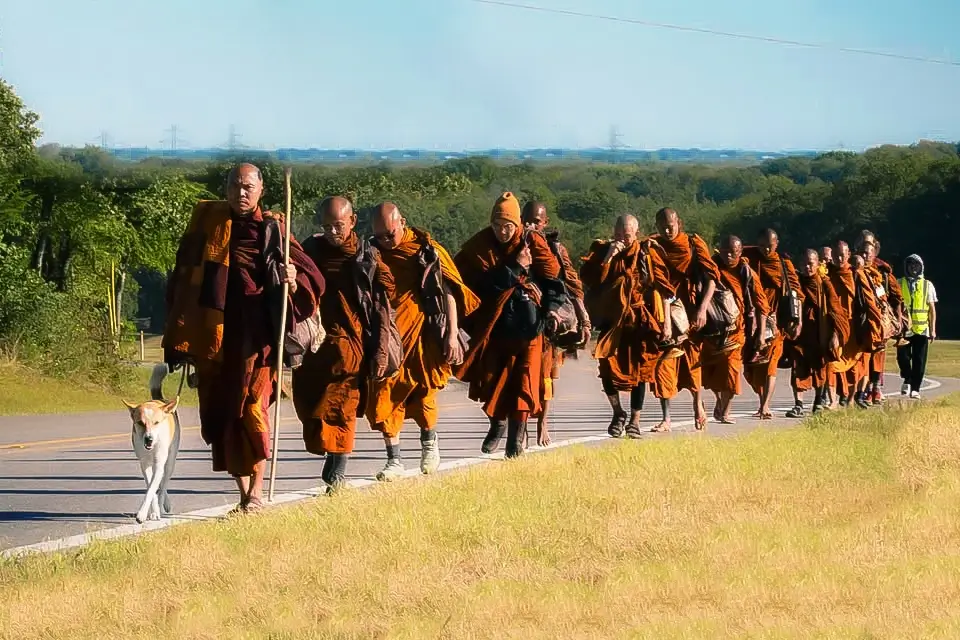
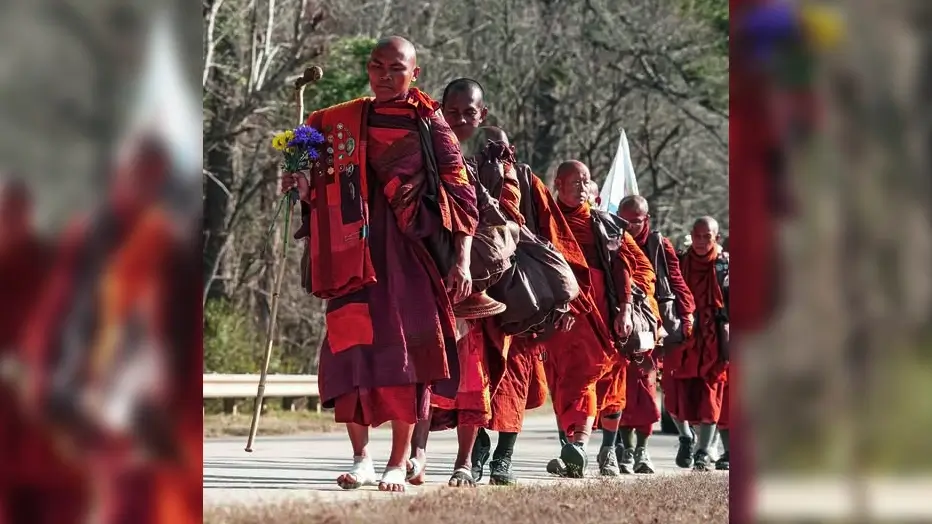
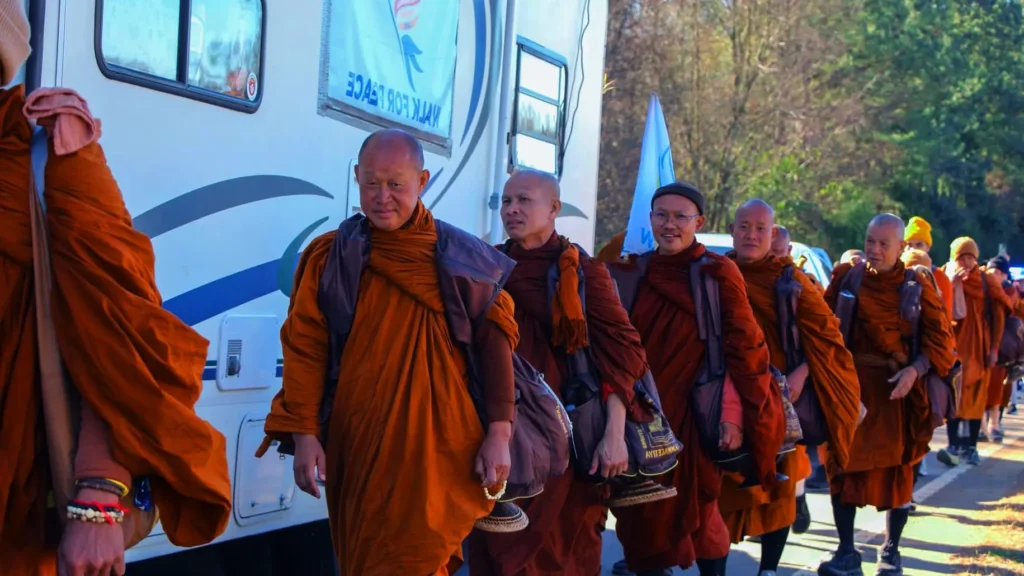
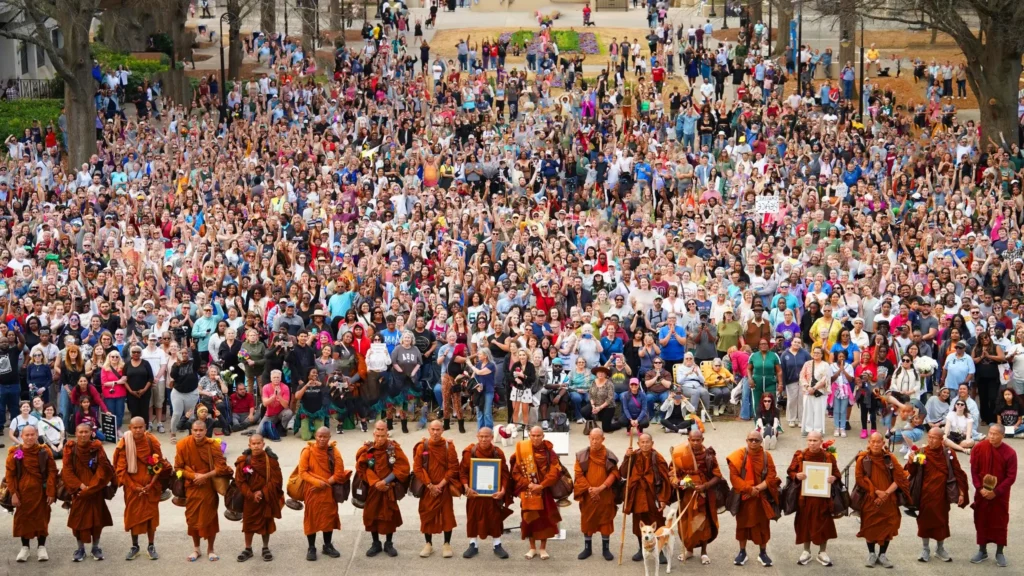
Imagine walking thousands of miles with only one goal: to inspire peace, compassion, and loving-kindness in the hearts of people you meet along the way. This is not a dream. It’s the reality of the Walk for Peace, a 120-day pilgrimage across the United States, led by Buddhist monks from the Huong Dao Vipassana Bhavana Center in Fort Worth, Texas. Accompanied by their loyal rescue dog, Aloka, these monks are walking from Fort Worth to Washington, D.C., covering over 2,300 miles (3,700 km) to raise awareness of nonviolence and harmony in a world often torn by conflict.
The Beginning of the Journey
The Walk for Peace commenced on October 26, 2025, when the monks embarked on this extraordinary journey. Their mission is simple yet profound: to remind humanity of the importance of peace, compassion, and kindness. Along the route, they meet people from all walks of life. students, workers, families, and even strangers who are touched by their message of nonviolence.
The monks’ journey is not just about physical endurance. Every step symbolizes mindful walking, a practice rooted in Buddhist tradition that emphasizes presence, awareness, and connection to all living beings.
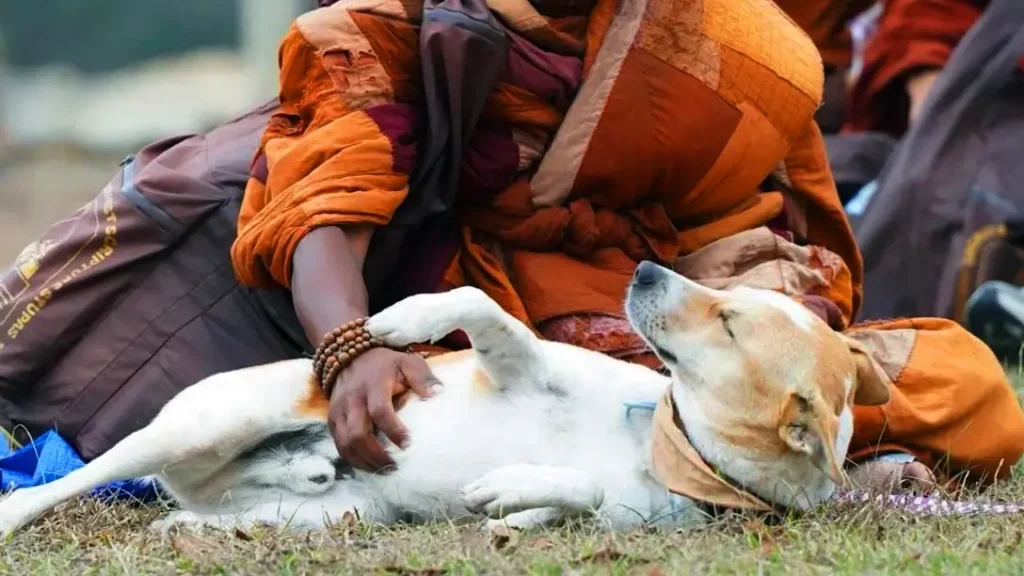
Accompanying them is Aloka, a rescue dog who has become a symbol of loyalty, resilience, and unconditional love. Social media followers have watched their journey unfold, often sharing their own stories of hope and peace inspired by the monks’ determination.

What Is a Peace Walk?
A peace walk is more than just a long stroll. It is a symbolic act of promoting harmony, understanding, and nonviolence. People from different faiths, cultures, and backgrounds organize peace walks to draw attention to global and local issues, ranging from war and conflict to community violence and environmental concerns.
Walking, in this sense, becomes a form of meditation in motion, allowing participants to reflect, connect, and inspire change without uttering a single word. The Walk for Peace is one of the most ambitious examples, demonstrating how a single act of walking can unite communities across vast distances.
Why Do People Walk for Peace?
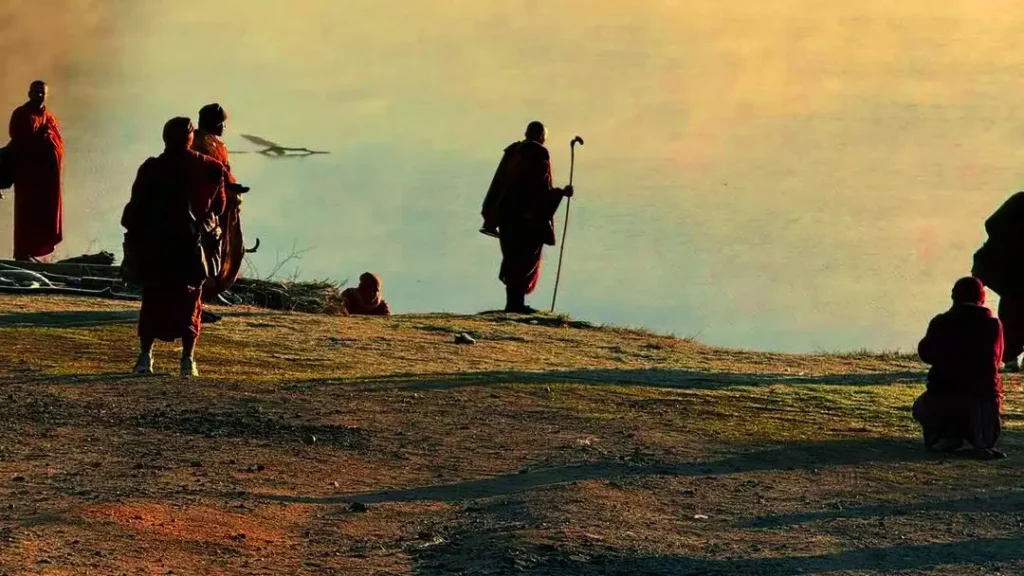
People walk for peace for many reasons, but the core motivation is universal: a desire to make the world a better place.
- Raising Awareness: Walking draws attention to causes that might otherwise go unnoticed. The longer the journey, the more people become aware of the message
- Symbolic Action: Walking represents persistence, patience, and commitment to nonviolence. It’s a living metaphor for the idea that meaningful change is slow but possible.
- Community Connection: Peace walks encourage dialogue between strangers, communities, and even nations, promoting understanding and reconciliation.
For the Buddhist monks, the Walk for Peace is also a spiritual practice, combining physical discipline with meditation, mindfulness, and compassion. Every step they take is a prayer for peace.
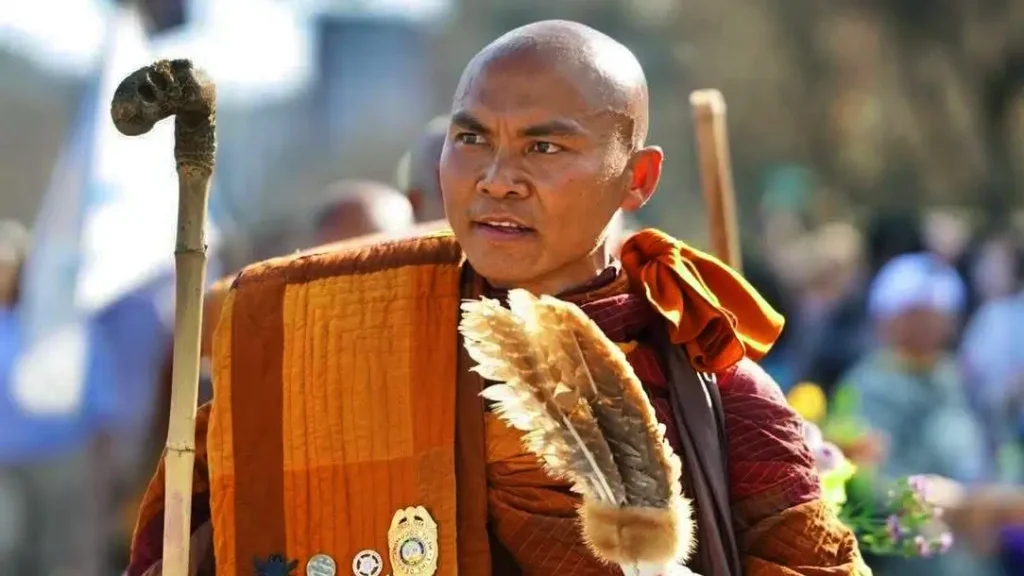
What Is the Buddhist Walk for Peace?
The Buddhist Walk for Peace is rooted in the teachings of mindfulness and loving kindness (metta). Unlike a protest march or political demonstration, this pilgrimage emphasizes inner transformation as a prerequisite for outer change.
During their walk, the monks practice:
- Mindful Walking: Moving with full awareness of every step and breath.
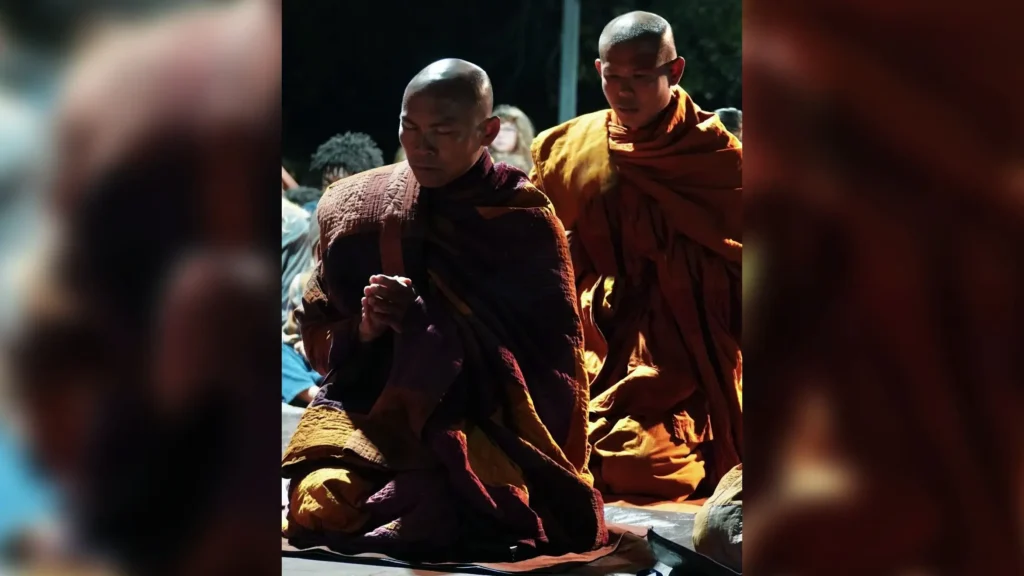
- Silent Meditation: Sitting quietly in reflection at rest stops and towns along the way.
- Community Engagement: Sharing teachings of compassion with anyone who wishes to listen.
Their journey reminds us that peace begins within. By walking across the United States, they create opportunities for people to reflect on their own actions and cultivate kindness in their daily lives.
The Role of Peacemakers
So, what exactly do peacemakers do? In the context of this walk, peacemakers are individuals who actively promote nonviolence and understanding in their communities.
They work by:
- Mediating conflicts and disputes
- Organizing initiatives like peace walks, workshops, and educational programs
- Inspiring individuals to embrace empathy and compassion
- Acting as role models for ethical and moral behavior
The monks leading the Walk for Peace are prime examples of peacemakers. Their daily dedication to walking, meditating, and interacting with people sets a living example of what it means to embody peace.
What Is a Gentle Walk Called?
In Buddhist practice, a gentle, mindful walk is often referred to as “walking meditation” or “kinhin” in Zen traditions. Unlike ordinary walking, this form of movement is deliberate.
- Each step is taken with awareness
- The walker focuses on the breath and bodily sensations
- It is a moving form of meditation that cultivates calmness, clarity, and compassion
The Walk for Peace is essentially a long-distance version of walking meditation, where each mile is imbued with intention, reflection, and purpose.
The Challenges of the Journey
Walking 2,300 miles is not easy. The monk’s face.
- Harsh Weather Conditions: From scorching heat in Texas to icy winds approaching Washington, D.C.
- Physical Strain: Blisters, fatigue, and sore muscles are constant companions.
- Logistical Hurdles: Planning routes, securing food and water, and finding safe resting places require meticulous preparation.
Yet, through every challenge, the monks embody resilience and mindfulness, showing that obstacles are growth opportunities. Aloka, their canine companion, brings joy, encouragement, and comfort to the team. Her presence reminds us that peace is not just a human endeavor. It includes care and love for all living beings.
How the Walk Inspires Others
Social media has amplified the impact of this journey. Followers share posts, videos, and live updates, spreading the message of peace far beyond the towns and cities the monks walk through.
People have reported feeling,
- Inspired: Motivated to practice kindness in their own lives
- Connected: A sense of unity with others across the country
- Hopeful: Seeing dedication to peace in a turbulent world restores faith in humanity
By documenting their journey, the monks create a ripple effect, proof that one mindful act can influence countless others.
What Can We Learn from the Walk for Peace?
The Walk for Peace teaches universally applicable lessons.
- Small Actions Matter: Even a single step toward peace can inspire change.
- Consistency Is Key: Peace is not achieved overnight; it is cultivated over time through persistent effort.
- Compassion Includes Everyone: Humans, animals, and the environment all deserve care and respect.
- Inner Peace Leads to Outer Peace: Transformation begins within, radiating outward to impact communities.
It’s a reminder that peace is not passive. It requires intentional action, mindfulness, and courage.

Conclusion: A Journey That Transforms
The Walk for Peace is more than a physical journey. It’s a spiritual, social, and emotional movement. From the dusty streets of Fort Worth to the historic avenues of Washington, D.C., the monks and Aloka demonstrate that peace is both a practice and a gift.
Their journey invites us all to ask: What can I do to cultivate peace in my life and community?
Perhaps it starts with something as simple as a mindful step, a kind word, or a compassionate act. And if thousands of such steps are taken, the world can move closer to the harmony we all wish to see.
Find more:https://sasokay.com/religion-8-paths-inner-unity/
What Is the Peace Walk About?
The Walk for Peace is a 2,300-mile pilgrimage by Buddhist monks from Fort Worth, Texas, to Washington, D.C., promoting compassion, kindness, and nonviolence.
Why Do People Participate in Peace Walks?
Participants walk to raise awareness, inspire change, and foster understanding in communities and nations.
Who Can Join a Buddhist Walk for Peace?
While the core group consists of monks, many peace walks welcome volunteers, supporters, and those interested in mindful walking and meditation.
What Do Peacemakers Do?
Peacemakers mediate conflicts, inspire empathy, and model nonviolent behavior in their communities.
What Is a Gentle Walk Called in Buddhism?
A mindful or walking meditation, sometimes referred to as kinhin, where every step is taken with awareness and purpose.
Can a Dog Like Aloka Inspire Peace Too?
Yes, Aloka’s presence symbolizes loyalty, love, and compassion, showing that peace includes care for all living beings.
Find more:
- Tricycle: The Buddhist Review, a respected Buddhist publication, non-politicalhttps://tricycle.org/
Any Suggestions, Feedback, or Information, Please: Contact Us